

Understanding Peptides
A clear, research-focused explanation — without the hype or confusion.
What Are Peptides?
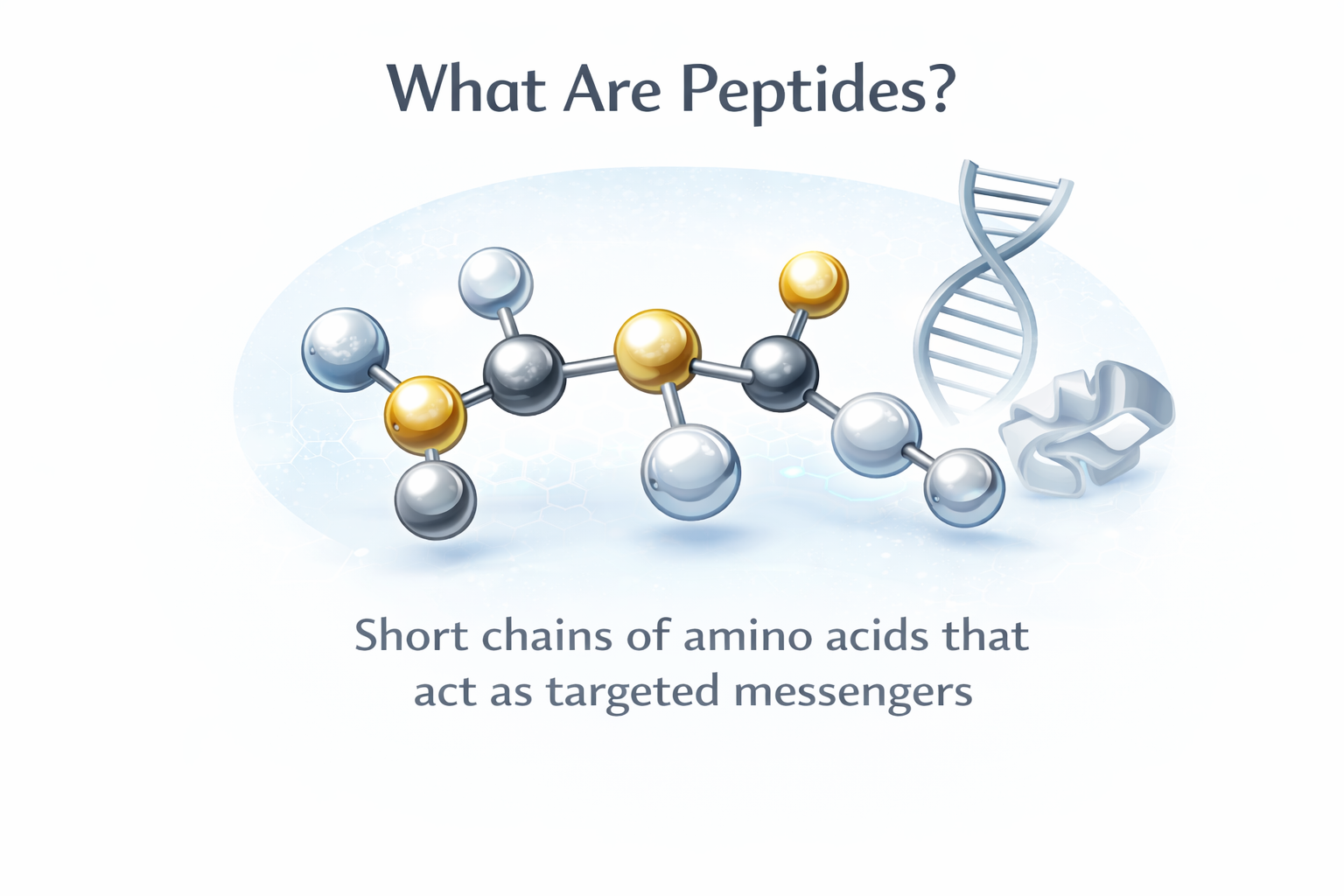
Peptides are short chains of amino acids — the same building blocks that make up proteins in the body. Think of them as small, targeted messengers that tell your body how to respond, repair, or regulate certain processes.
Your body naturally produces many peptides every day. They play roles in things like cellular communication, tissue repair, metabolism, immune response, and neurological signaling. Because of their precise structure, peptides can interact with specific receptors in the body, allowing them to support very targeted biological functions.
Unlike broader compounds, peptides are valued for their precision. Small changes in sequence or structure can produce very different interactions, which is why accuracy, purity, and consistency are critical when working with them. In research settings, peptides are used to explore how biological systems respond under controlled conditions, where reliability and repeatability directly affect outcomes.
How Do Peptides Work?
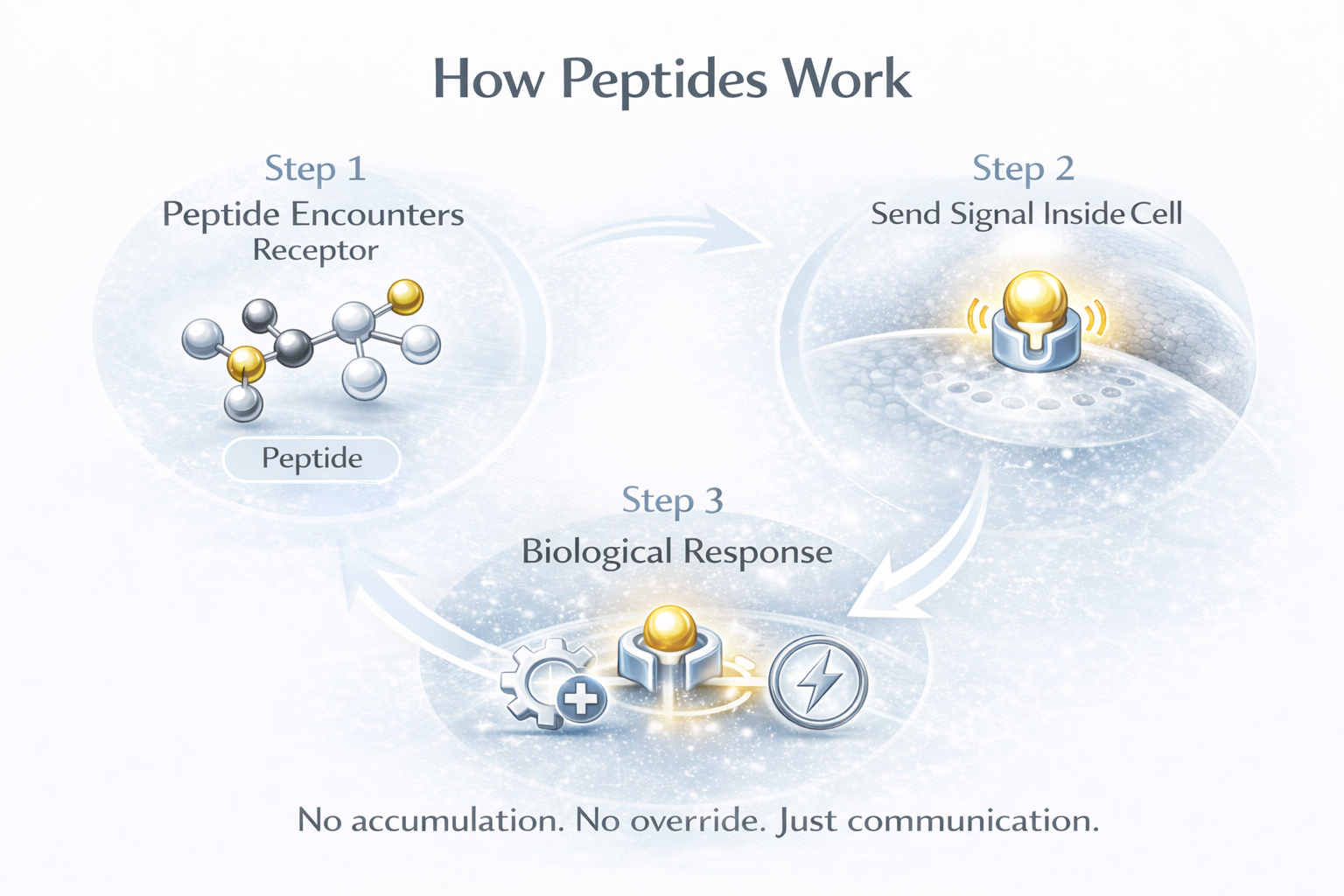
Peptides work by sending signals to cells. When a peptide binds to a specific receptor, it can trigger a response — such as activating repair pathways, influencing hormone signaling, or supporting cellular regeneration.
You can think of peptides like:
Instructions instead of raw materials
Signals rather than stimulants
Keys designed to fit very specific locks in the body
This targeted action is what makes peptides unique compared to many traditional compounds.
Research Use Only
The peptides offered on this site are intended strictly for research and laboratory use. They are not approved for human or veterinary consumption and are not intended to diagnose, treat, cure, or prevent any disease.